
 English
 Russian
 Portuguese
 Arabic
 Bangla
 Indonesian


PE Battery Separator Market Grows Driven by EV Demand in 2026
- By: JinHan
- Feb 02,2026
follow us
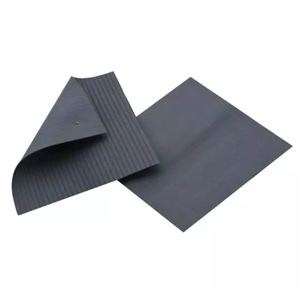
The global polyethylene (PE) battery separator market is experiencing robust growth in 2026, fueled by the rising demand for high-performance lead-acid batteries in automotive, industrial, and energy storage sectors. According to the latest report from Datam Intelligence 4 Market Research LLP, the market, which reached USD 3.5 billion in 2023, is projected to expand at a compound annual growth rate (CAGR) of 11.8% through 2031, aiming to hit USD 8.5 billion by the end of the forecast period. This growth is particularly driven by advancements in PE separator technology and the accelerating adoption of electric vehicles (EVs) worldwide, which has created a surge in demand for reliable battery components.
PE battery separators play a critical role in lead-acid battery performance, serving as a physical barrier between the positive and negative electrodes to prevent short circuits while enabling efficient ionic conductivity. Unlike traditional separators, modern PE separators feature microporous structures that enhance electrolyte absorption and ion transfer, thereby improving battery cycle life and discharge efficiency. In 2026, manufacturers are focusing on developing high-porosity PE separators with enhanced thermal stability, a key requirement as lead-acid batteries are increasingly used in high-temperature environments such as EVs and industrial backup systems.
Recent industry developments highlight the active expansion of major players in the PE separator market. In October 2025, Celgard, a subsidiary of Asahi Kasei, expanded its U.S. production capacity for PE separators by 25% at its North Carolina facilities, in partnership with leading EV battery manufacturers including Tesla. The expansion aims to meet the growing demand for high-porosity microporous PE films that support improved ionic conductivity and fast-charging performance in lead-acid and lithium-ion hybrid battery systems. Similarly, in September 2025, Entek International launched a new ceramic-coated PE separator certified for enhanced thermal stability, targeting lead-acid battery suppliers in the automotive sector amid tightening safety regulations.
Asia-Pacific remains the dominant market for PE battery separators, holding the highest regional share in 2026. This is attributed to the region’s large lead-acid battery production capacity, particularly in China and India, where the automotive and industrial sectors are expanding rapidly. In October 2025, Senior Technology Material Co., Ltd. opened a new PE separator plant in China, supplying high-rate discharge variants to B2B clients in the EV battery production sector. Meanwhile, India’s Targray Technology imported record volumes of microporous PE films from Japan in September 2025, driven by booming domestic EV manufacturing under national incentive programs.
The U.S. market is also emerging as a key growth hub, with manufacturers accelerating innovation in EV-grade PE separators. In August 2025, SK IE Technology introduced a high-strength PE separator compliant with UL safety standards, distributed through industrial suppliers for next-generation lead-acid battery prototypes. This separator is designed to withstand extreme temperatures and prevent thermal runaway, addressing a critical safety concern in lead-acid battery applications.
Despite the growth, the PE separator market faces challenges, including the rising competition from alternative separator materials such as AGM (Absorbent Glass Mat) and the volatility of raw material prices. However, industry experts note that PE separators’ cost-effectiveness and compatibility with traditional lead-acid battery manufacturing processes will continue to support their market dominance, especially in mid-to-low-end applications. As global efforts to reduce carbon emissions intensify, the demand for energy-efficient lead-acid batteries will further drive the adoption of advanced PE separators, positioning the market for sustained growth in the coming years.
--End--
-
 Yang Du Senior Engineer | Storage Battery Expert
✓ 28 years of experience in storage-battery separators
✓ Expert in PE separator production and testing
✓ Senior Manager at CTMT
✓ B.Eng. in Chemical Engineering, Hebei University of Technology
✓ Managed PE separator cooperation projects with Exide, Enersys, JCI
-
 Hong Chen Standardization Expert | Youth Entrepreneurship Tutor
✓ Vice Chairman, China Physical Chemistry Power Industry Association
✓ Zhejiang "Ten Thousand Talents" Leading Talent
✓ 80+ national patents / 20+ monographs
✓ Contributed to 10+ international & national standards
✓ National Sci-Tech Progress Award (3rd prize) -
 Xianzhang Wu Senior Engineer | Energy Storage Expert
✓ Vice Chairman, China Physical Chemistry Power Industry Association
✓ Zhejiang "Ten Thousand Talents" Leading Talent
✓ 80+ national patents / 20+ monographs
✓ Contributed to 10+ international & national standards
✓ National Sci-Tech Progress Award (3rd prize) -
 Guangjun Zang Senior Engineer | Lead-Acid Battery Expert
✓ 35 years in lead acid battery industry
✓ Expert in battery materials, design and engineering
✓ Technical Project Leader for NT AGM VRLA batteries
✓ Specializes in tubular battery R&D and quality control
✓ Supplies technical support to domestic battery manufacturers
-
 Fang Liu Senior Manager | Bilingual Expert
✓ 23 years of in-depth experience in English translation
✓ Master's in TESOL, University of South Australia
✓ Skilled in cross-border client communication & technical translation
✓ Former senior teacher & US visiting scholar
✓ Experienced in employee management and team building
-
 Wei Shan


