
 English
 Russian
 Portuguese
 Arabic
 Bangla
 Indonesian
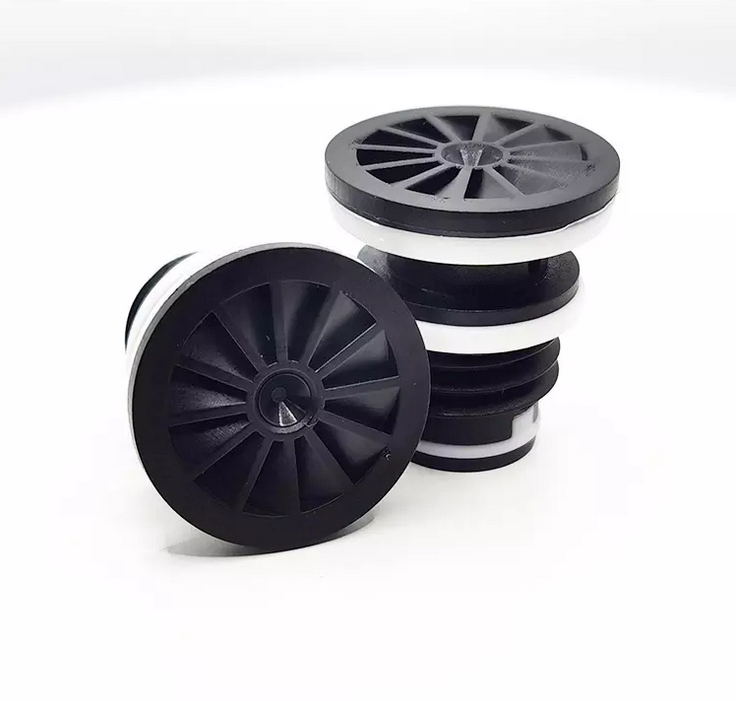


AGM Start-Stop Vent Plug: Small Part, Critical Job
- By: JinHan
- Jul 20,2026
follow us
If you're working with AGM start-stop batteries, you know the vent plug isn't just a cap. It's the only thing standing between proper pressure regulation and a battery that fails early.
But here's the thing — most people don't think much about it. They spec whatever came with the last design and move on. That works until it doesn't.
We've been supplying AGM vent plugs for start-stop applications for a while now. Here's what we've learned about what makes a good one — and what goes wrong when you cut corners.
What an AGM vent plug actually does?
Start-stop batteries live a hard life. Repeated discharge and recharge cycles. Under-hood heat. Vibration. The vent plug has to handle all of that.
Unlike flooded batteries that vent continuously, AGM batteries are sealed under normal conditions. The vent plug only opens when internal pressure exceeds a set threshold — typically between 1 and 3 PSI. When it opens, it releases excess gas (mainly hydrogen) to prevent case rupture. Then it closes again to keep the battery sealed.
That's the simple version. The real job is more demanding:
Pressure regulation. Open at the right pressure. Close at the right pressure. Repeat tens of thousands of times.
Acid retention. Keep sulfuric acid inside the battery. No mist. No leakage. No corrosion on terminals or surrounding equipment.
Flame arrestor. Stop external sparks from igniting hydrogen gas inside the battery.
Contamination barrier. Keep dirt and moisture out.
What makes one plug better than another?
We've tested a bunch of them. Here's where the differences show up.
1. Pressure accuracy and consistency
This is the biggest one. Some plugs open at 15 kPa on the first cycle and drift to 25 kPa after a few thousand cycles. That's not regulation — that's guesswork.
For start-stop applications, the pressure threshold needs to stay consistent over the battery's life. A good plug holds its set pressure within ±2% variation even after 50,000+ cycles. That means predictable venting behavior from day one to end of life.
Some vent plugs use rubber components for the sealing element. The problem with rubber is that it ages — heat, oxygen, and acid exposure degrade it over time. The compression rate and elasticity change, and the opening pressure drifts. More advanced designs use mechanical valve structures (spring-loaded) that don't rely on rubber for pressure control. These hold their set pressure much longer.
2. Acid resistance
The plug sits on top of the battery, directly exposed to acid vapor and occasional liquid contact. Cheap materials degrade. They swell, crack, or lose structural integrity.
The better plugs use acid-resistant polymer blends that hold up in 98% sulfuric acid concentration without degradation. Not the cheapest material. But it's the difference between a plug that lasts 8 years and one that fails in 2.
3. Temperature tolerance
Engine compartments get hot. Start-stop batteries see temperatures from -40°C to well over 100°C. A vent plug that works at room temperature but fails in heat isn't useful.
Good plugs run reliably from -40°C to +120°C, with short-term tolerance up to 150°C. The material stays stable. The sealing mechanism doesn't deform.
4. Filtration
Some plugs are just a hole with a valve. Others have built-in filtration.
Better plugs include a filter system that stops acid mist from escaping even when the valve opens. PE foam pre-filter, nano-fiber acid coalescer, and a flame arrestor layer — that's the combination that actually keeps the battery exterior dry and corrosion-free.
5. Cycle life
Start-stop batteries can cycle 3000+ times in their life. The vent plug needs to survive that without failure.
We've seen plugs rated for 100,000+ pressure cycles. That's the kind of spec that matches the battery's expected service life. Anything less, and you're gambling on the plug failing before the battery does.
-
 Yang Du Senior Engineer | Storage Battery Expert
✓ 28 years of experience in storage-battery separators
✓ Expert in PE separator production and testing
✓ Senior Manager at CTMT
✓ B.Eng. in Chemical Engineering, Hebei University of Technology
✓ Managed PE separator cooperation projects with Exide, Enersys, JCI
-
 Hong Chen Standardization Expert | Youth Entrepreneurship Tutor
✓ Vice Chairman, China Physical Chemistry Power Industry Association
✓ Zhejiang "Ten Thousand Talents" Leading Talent
✓ 80+ national patents / 20+ monographs
✓ Contributed to 10+ international & national standards
✓ National Sci-Tech Progress Award (3rd prize) -
 Xianzhang Wu Senior Engineer | Energy Storage Expert
✓ Vice Chairman, China Physical Chemistry Power Industry Association
✓ Zhejiang "Ten Thousand Talents" Leading Talent
✓ 80+ national patents / 20+ monographs
✓ Contributed to 10+ international & national standards
✓ National Sci-Tech Progress Award (3rd prize) -
 Guangjun Zang Senior Engineer | Lead-Acid Battery Expert
✓ 35 years in lead acid battery industry
✓ Expert in battery materials, design and engineering
✓ Technical Project Leader for NT AGM VRLA batteries
✓ Specializes in tubular battery R&D and quality control
✓ Supplies technical support to domestic battery manufacturers
-
 Fang Liu Senior Manager | Bilingual Expert
✓ 23 years of in-depth experience in English translation
✓ Master's in TESOL, University of South Australia
✓ Skilled in cross-border client communication & technical translation
✓ Former senior teacher & US visiting scholar
✓ Experienced in employee management and team building
-
 Wei Shan


