
 English
 Russian
 Portuguese
 Arabic
 Bangla
 Indonesian
AGM Separator vs PE Separator — Where Each One Makes Sense
- By: JinHan
- Jun 22,2026
follow us
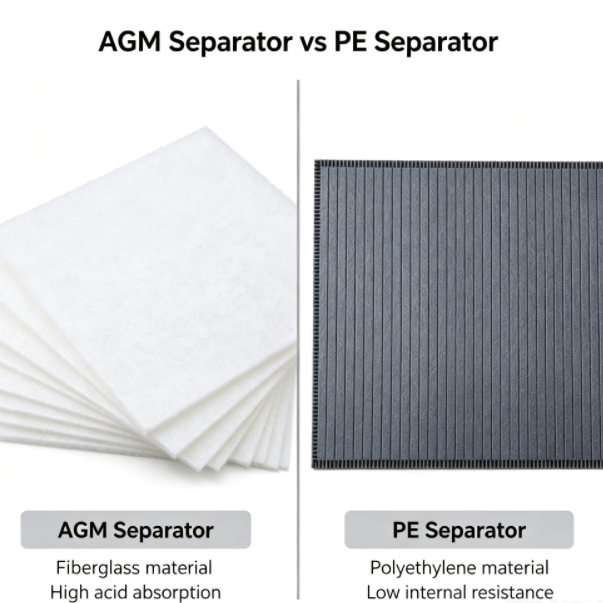
This comes up all the time. Which is better? Neither. They're for different things.
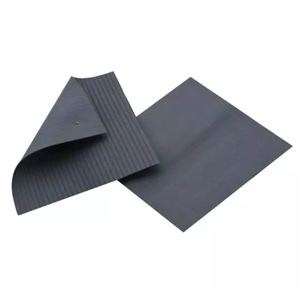
Use PE Separator if:
The battery is flooded (liquid electrolyte)
Cost is the primary concern
The application doesn't require sealed or maintenance-free operation
The battery is a standard automotive starting battery (not start-stop)
Use AGM Separator if:
The battery needs to be sealed and spill-proof
Start-stop or micro-hybrid applications
Deep-cycle use (solar, marine, floor scrubbers, some UPS)
The battery needs to work in multiple orientations
Oxygen recombination is required (valve-regulated design)
They're not interchangeable. PE is for flooded. AGM is for sealed VRLA. If you're building a sealed battery, PE isn't an option. If you're building a flooded battery, AGM doesn't make sense.
A few things we see go wrong
Over-specifying. Some customers ask for the thickest, highest-performance AGM they can get. Then they use it in a standard UPS where a mid-spec mat would work perfectly. They're paying extra and not getting any benefit.
Under-specifying. The opposite. Trying to save pennies on AGM in a start-stop battery that sees heavy cycling. A cheap AGM will fail early. The warranty cost will be more than the savings.
Not matching the compression. We've seen customers use the same AGM thickness for different battery models without changing the assembly pressure. The acid retention ends up wrong. The battery underperforms.
Assuming all AGM is the same. It's not. There are real differences in fiber quality, binder type, porosity control, and thickness consistency. We've had customers switch from a cheap AGM to a mid-spec AGM and see cycle life improve by 30%. Same design, same assembly. Just a better separator.
Click HERE to go to the product page.
-
 Yang Du Senior Engineer | Storage Battery Expert
✓ 28 years of experience in storage-battery separators
✓ Expert in PE separator production and testing
✓ Senior Manager at CTMT
✓ B.Eng. in Chemical Engineering, Hebei University of Technology
✓ Managed PE separator cooperation projects with Exide, Enersys, JCI
-
 Hong Chen Standardization Expert | Youth Entrepreneurship Tutor
✓ Vice Chairman, China Physical Chemistry Power Industry Association
✓ Zhejiang "Ten Thousand Talents" Leading Talent
✓ 80+ national patents / 20+ monographs
✓ Contributed to 10+ international & national standards
✓ National Sci-Tech Progress Award (3rd prize) -
 Xianzhang Wu Senior Engineer | Energy Storage Expert
✓ Vice Chairman, China Physical Chemistry Power Industry Association
✓ Zhejiang "Ten Thousand Talents" Leading Talent
✓ 80+ national patents / 20+ monographs
✓ Contributed to 10+ international & national standards
✓ National Sci-Tech Progress Award (3rd prize) -
 Guangjun Zang Senior Engineer | Lead-Acid Battery Expert
✓ 35 years in lead acid battery industry
✓ Expert in battery materials, design and engineering
✓ Technical Project Leader for NT AGM VRLA batteries
✓ Specializes in tubular battery R&D and quality control
✓ Supplies technical support to domestic battery manufacturers
-
 Fang Liu Senior Manager | Bilingual Expert
✓ 23 years of in-depth experience in English translation
✓ Master's in TESOL, University of South Australia
✓ Skilled in cross-border client communication & technical translation
✓ Former senior teacher & US visiting scholar
✓ Experienced in employee management and team building
-
 Wei Shan


