
 English
 Russian
 Portuguese
 Arabic
 Bangla
 Indonesian

EFB Separator vs. PE Separator: What's the Actual Difference?
- By: JinHan
- Aug 17,2026
follow us
Click HERE to view our products!
In the past two years, inquiries for EFB separators have been gradually on the rise. Previously, when customers inquired about separators, their choices were basically limited to PE or AGM. Now, EFB has become a standalone requirement.
Many customers, when seeing EFB separator samples for the first time, would ask: “Isn’t this just a PE separator?”
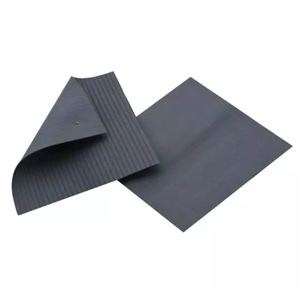
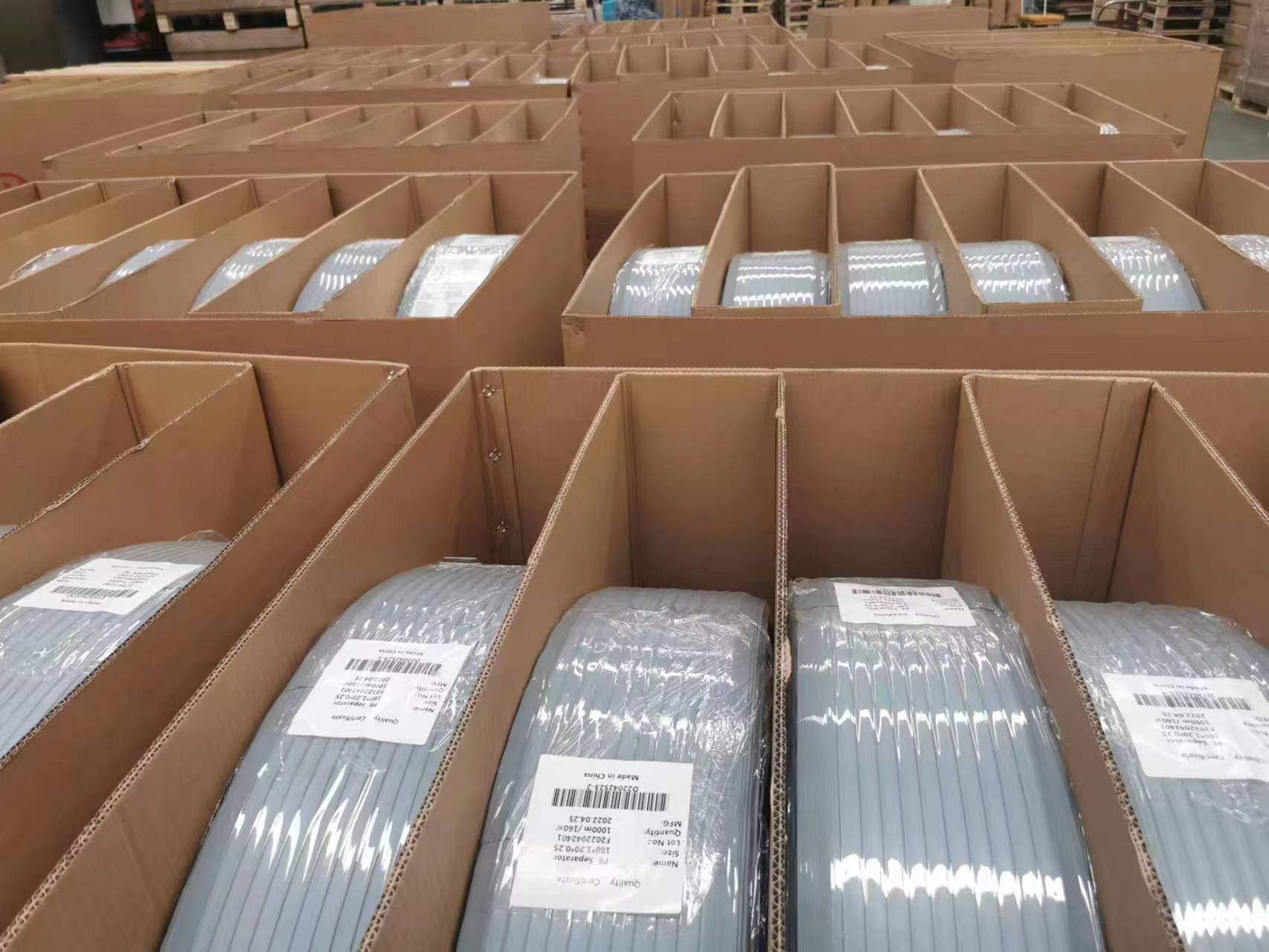
To be honest, they do look quite similar. Both are supplied in rolls and have comparable thickness. Compared with the fluffy glass‑fiber mat of AGM separators, EFB and PE separators look almost identical. There may be slight color differences, but it is really hard to tell them apart merely by appearance.
Nevertheless, despite their similar appearance, their actual performance differs significantly.
What makes EFB batteries different from conventional ones?
EFB batteries were originally developed for start‑stop systems. When conventional flooded batteries are used in start‑stop vehicles, their service life drops sharply. Frequent cranking and charging, persistent partial‑charge states, plus high temperatures inside the engine compartment — combined, these conditions overwhelm standard batteries.
EFB batteries cost more than conventional flooded batteries but less than AGM batteries, occupying the mid‑price segment.
What modifications have been made to EFB separators?
Few differences can be spotted with the naked eye when you place a standard PE separator alongside an EFB separator. However, differences become obvious when held up to light or when examining the fractured cross‑section after tearing.
An extra layer is added.
A standard PE separator is single‑layer. An EFB separator features an additional polyester fiber layer (not glass fiber) on the positive‑electrode side. This is what many documents refer to as the “fiber layer” or “fabric layer”.
What is the function of this layer? Over time, positive active material softens and sheds. Without this fiber barrier, shed debris sinks to the bottom of the battery. Accumulated debris may trigger short‑circuits. This fiber layer traps active material close to the plates and prevents it from shedding and migrating to the bottom.
Enhanced oxidation resistance
Antioxidants are already incorporated into PE separators; otherwise they cannot withstand the highly oxidizing environment at the positive electrode for long. EFB separators build further on this formulation. EFB batteries endure more cycles than standard batteries, subjecting the separator to more aggressive oxidative conditions at the positive electrode. The antioxidant formulation for ordinary PE separators is designed for the service life of conventional batteries and may fail to meet the lifetime requirements of EFB batteries.
Lower water consumption
EFB batteries operate at elevated temperatures, so low water consumption is critical. A standard PE separator achieves a certain level of water loss over a given test period, while EFB separators are required to achieve significantly lower water consumption under the same conditions. This represents a major formulation adjustment for EFB separators. Manufacturers adopt different technical approaches, yet share the same goal: minimize water loss at high temperatures.
Another common source of confusion
Because EFB separators resemble PE separators, many documents categorize them under the broad PE‑separator umbrella. Still, an EFB separator is not pure PE. It is PE substrate plus an additional polyester‑fiber layer.
AGM separators belong to an entirely different category: glass‑fiber mats that absorb and retain electrolyte rather than allowing it to flow freely, with a distinct visual appearance.
To summarize:
‑ Conventional PE separator: single‑layer PE
‑ EFB separator: PE substrate with polyester‑fiber layer
‑ AGM separator: glass‑fiber mat
Three products, three material systems, for three distinct application scenarios.
-
 Yang Du Senior Engineer | Storage Battery Expert
✓ 28 years of experience in storage-battery separators
✓ Expert in PE separator production and testing
✓ Senior Manager at CTMT
✓ B.Eng. in Chemical Engineering, Hebei University of Technology
✓ Managed PE separator cooperation projects with Exide, Enersys, JCI
-
 Hong Chen Standardization Expert | Youth Entrepreneurship Tutor
✓ Vice Chairman, China Physical Chemistry Power Industry Association
✓ Zhejiang "Ten Thousand Talents" Leading Talent
✓ 80+ national patents / 20+ monographs
✓ Contributed to 10+ international & national standards
✓ National Sci-Tech Progress Award (3rd prize) -
 Xianzhang Wu Senior Engineer | Energy Storage Expert
✓ Vice Chairman, China Physical Chemistry Power Industry Association
✓ Zhejiang "Ten Thousand Talents" Leading Talent
✓ 80+ national patents / 20+ monographs
✓ Contributed to 10+ international & national standards
✓ National Sci-Tech Progress Award (3rd prize) -
 Guangjun Zang Senior Engineer | Lead-Acid Battery Expert
✓ 35 years in lead acid battery industry
✓ Expert in battery materials, design and engineering
✓ Technical Project Leader for NT AGM VRLA batteries
✓ Specializes in tubular battery R&D and quality control
✓ Supplies technical support to domestic battery manufacturers
-
 Fang Liu Senior Manager | Bilingual Expert
✓ 23 years of in-depth experience in English translation
✓ Master's in TESOL, University of South Australia
✓ Skilled in cross-border client communication & technical translation
✓ Former senior teacher & US visiting scholar
✓ Experienced in employee management and team building
-
 Wei Shan


