
 English
 Russian
 Portuguese
 Arabic
 Bangla
 Indonesian
PE Separator: A Few Things We Don't Usually Talk About
- By: JinHan
- Sep 07,2026
follow us
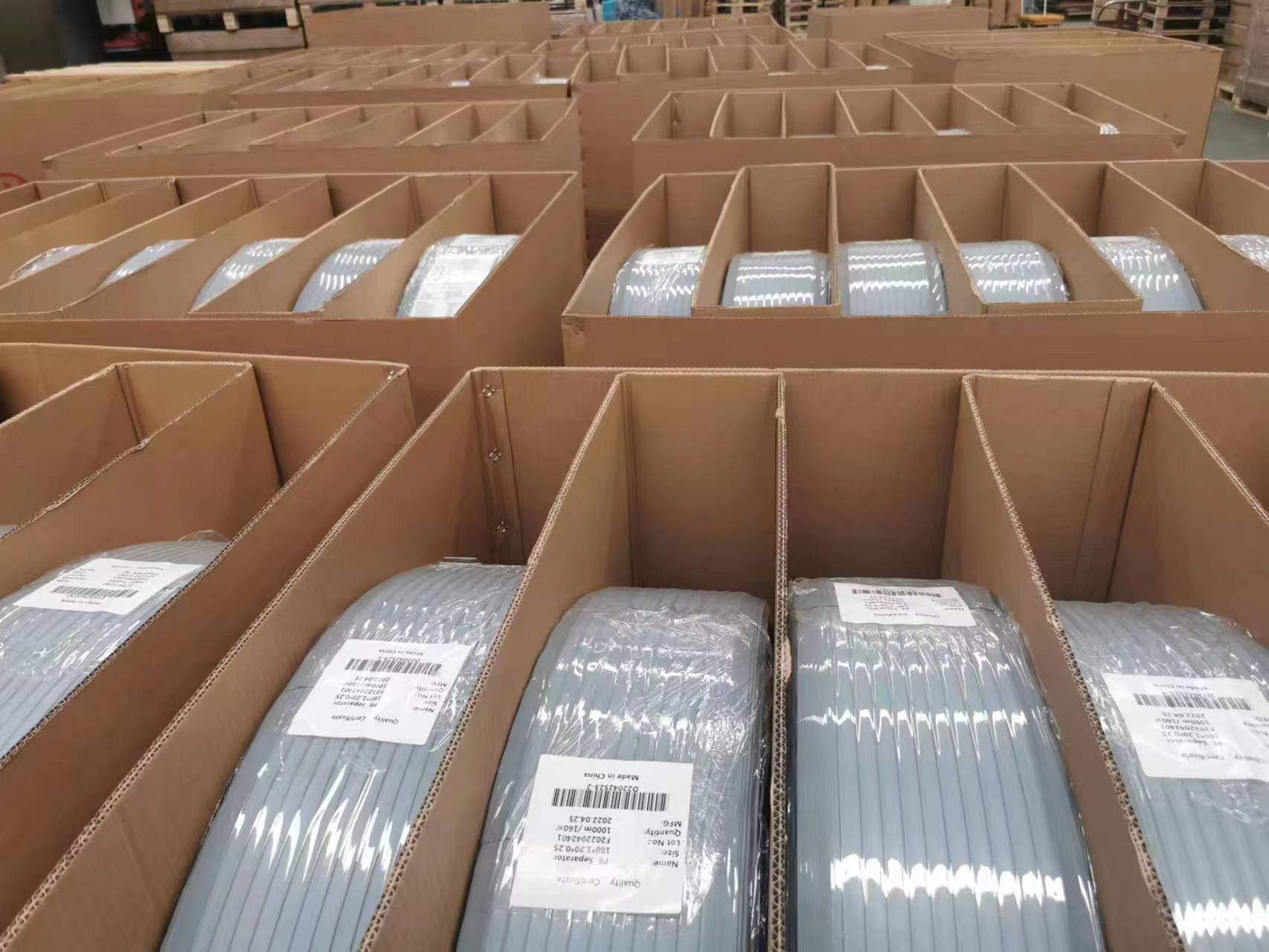
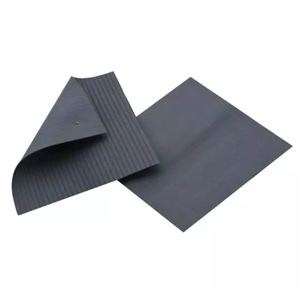
PE separators have been used in lead-acid batteries for nearly half a century. Most information available online covers the same few standard merits: low resistance, acid resistance and uniform thickness, repeating these points over and over. We work with this material every single day, so today let’s talk about real issues encountered during actual production.
A Common Misconception About Pore Size
Many technical documents state that PE separators feature "uniform pore size", yet in real manufacturing, PE separators produced by different manufacturers via distinct processes show drastically different pore size distribution. Uniform pores are merely a theoretical ideal.We have tested numerous samples sent by customers. Some low-cost separators exhibit pore size discrepancies of several times. When fitted into batteries, this defect does not surface in the short term. However, after a year or six months of operation, areas with oversized pores allow positive active material to penetrate through, resulting in micro-short circuits. Customers often mistake this for poor electrode plate quality, while the root cause actually lies in the separator.
Changes After Acid Soaking Are More Complex Than Expected
Most people only focus on the performance of dry separators, but separators operate fully immersed in acid electrolyte.Wet-state resistance differs entirely from dry-state resistance. Some separators deliver excellent test results when dry, yet their resistance rises sharply after 24 hours of acid soaking. This occurs as additives inside the separator gradually leach out in acid and block part of the pores.
Practical Insights on Composite Glass Fiber Layers
PE-glass fiber composite separators have been in production for several years. Below are practical observations accumulated from field application:A thicker glass fiber layer does not equal better performance. An excessively thick fiber layer increases the overall separator thickness, taking up space meant for electrode plates and ultimately reducing battery capacity.The fiber orientation of the glass fiber layer impacts acid absorption speed. Some composite separators feature randomly arranged glass fibers, which absorb acid quickly but unevenly. The glass fiber layers we adopt undergo directional carding, enabling more consistent electrolyte diffusion along the fiber direction. This shortens electrolyte filling time — the exact time saved varies by battery design, yet operators consistently report much smoother filling operations.Another notable advantage is superior stiffness compared to pure PE separators. On automatic plate wrapping lines, pure PE separators tend to sag and shift off track. With the added glass fiber layer, composite separators hold their shape rigidly and run far more smoothly through equipment. This was not our primary design objective, yet it is the most frequently mentioned benefit in customer feedback.
-
 Yang Du Senior Engineer | Storage Battery Expert
✓ 28 years of experience in storage-battery separators
✓ Expert in PE separator production and testing
✓ Senior Manager at CTMT
✓ B.Eng. in Chemical Engineering, Hebei University of Technology
✓ Managed PE separator cooperation projects with Exide, Enersys, JCI
-
 Hong Chen Standardization Expert | Youth Entrepreneurship Tutor
✓ Vice Chairman, China Physical Chemistry Power Industry Association
✓ Zhejiang "Ten Thousand Talents" Leading Talent
✓ 80+ national patents / 20+ monographs
✓ Contributed to 10+ international & national standards
✓ National Sci-Tech Progress Award (3rd prize) -
 Xianzhang Wu Senior Engineer | Energy Storage Expert
✓ Vice Chairman, China Physical Chemistry Power Industry Association
✓ Zhejiang "Ten Thousand Talents" Leading Talent
✓ 80+ national patents / 20+ monographs
✓ Contributed to 10+ international & national standards
✓ National Sci-Tech Progress Award (3rd prize) -
 Guangjun Zang Senior Engineer | Lead-Acid Battery Expert
✓ 35 years in lead acid battery industry
✓ Expert in battery materials, design and engineering
✓ Technical Project Leader for NT AGM VRLA batteries
✓ Specializes in tubular battery R&D and quality control
✓ Supplies technical support to domestic battery manufacturers
-
 Fang Liu Senior Manager | Bilingual Expert
✓ 23 years of in-depth experience in English translation
✓ Master's in TESOL, University of South Australia
✓ Skilled in cross-border client communication & technical translation
✓ Former senior teacher & US visiting scholar
✓ Experienced in employee management and team building
-
 Wei Shan


